Zeal by Morgan Jerkins
a love letter to Black Americans

Rating: 5/5 | Genre: Historical Fiction
TW: sexual assault, slavery, violence, torture, death, suicide, drug abuse

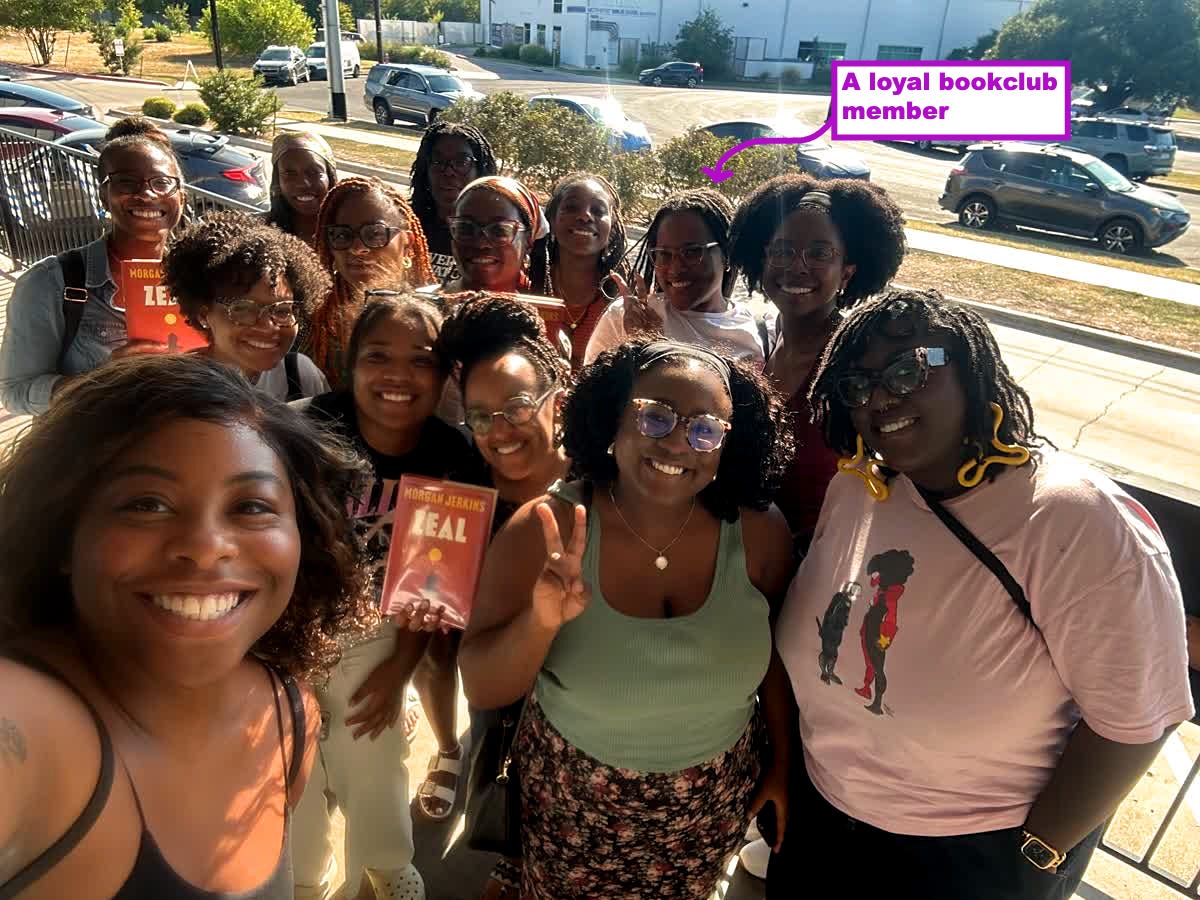
The September bookclub pick for the Austin-based bookclub I’m in was Zeal by Morgan Jerkins. Highly anticipated, it had been on my TBR since the pub date dropped and I was excited to jump right into this book.
I picked up Zeal expecting a love story. Not just any love story, but the kind that sweeps across centuries. The “we were meant to find each other in every lifetime” type of story. And at first, Morgan Jerkins gives us all the right signals: Harrison searching for his beloved Tirzah after the Civil War; Tirzah, steadfast and determined, holding onto hope even when the world pushes against her. Even in the present-day Harlem sections, we meet Ardelia and Oliver, whose first encounters feel charged with the spark of destiny.
But as the novel unfolded, I realized Jerkins wasn’t interested in giving me a romantic reunion. Instead, she was mapping the way love, silence, and trauma ripple through generations. How one choice, one act of survival or betrayal, can shape descendants who don’t even know your name.
This isn’t a romance novel. Not exactly. It’s something bigger. Zeal is a love letter to Black Americans, an offering that says: I see you. I see your wounds, your endurance, your contradictions, your prayers. It’s history intertwined with memory, and reading it felt less like following a plot and more like being led through lessons of ancestors.
Migration: Natchez to Harlem
Jerkins structures the book almost like a quilt. Each patch is a place, time, and a new voice stitched into the whole:
Natchez, 1865: Harrison searches desperately for Tirzah after the war, but a Freedmen’s Bureau worker named Tabitha intervenes. Her well-meaning decision, rooted in practicality and protection, severs the lovers’ fates and plants the first fracture.
Louisiana, 1870s–80s: Tirzah builds stability as a teacher in a Freedmen’s School, mothering a new generation while nursing the ghost of Harrison. Hope lingers, but life moves.
Nicodemus, Kansas, 1882 and beyond: Descendants carve out a community against the weight of racial hostility, spiritual unrest, and family wounds. This is where the story splinters into multiple lineages, introducing us to characters who feel familiar and complicated all at once.
Harlem, 2020: Ardelia and Oliver finally confront the secrets and silences threaded through their families. They stand at the intersection of inheritance and choice: what does it mean to carry the weight of a past you didn’t choose but can’t escape?
By the time I reached the modern section, I realized I wasn’t waiting for Harrison and Tirzah’s reunion anymore. I was reading to understand how their separation and their silence lived on through Ardelia and Oliver.
Let’s talk about the messy ass characters…
One of Jerkins’ most powerful skills here is the way she introduces characters as likable, almost heroic, only to complicate our feelings as their decisions unfold.
Harrison is noble in his devotion, but we see how desperation can curdle into rigidity. Tirzah is a badass who fights for who she loves, but holds secrets that hurts others close to her chest. Tabitha seems protective at first, but her interference leaves scars. Miriam and Free are each introduced in a way that makes us want to root for them, but as they age and experience trauma and life in general, it gets harder to love them. And then, with every generation, we’re forced to sit with the harm their silence or inaction creates.
It’s not a condemnation necessarily, but rather a mirror. Jerkins shows us how easy it is to justify choices in the moment, how quickly survival becomes a pattern, and how silence hardens into inheritance. Literally exploring generational trauma.
Does it count as a love story?
The marketing might lead you to believe this novel is about “enduring love across generations,” but the deeper current of Zeal is survival, resilience, and the haunting presence of unspoken truths.
Love is here, yes, but not always romantic. It’s the love of Tirzah committing to building a life when she could have closed herself off. It’s the love of Novella raising twelve children despite scarcity of love, affection, or even money. It’s the complicated, brittle love of Corinthian Sterling for his family, warped by bitterness and fear of the unknown, but still present. And it’s the quiet endurance of Ardelia, unfolding the knowledge of her family’s fractures in a Harlem apartment while deciding how much of that legacy she wants to carry.
The book makes a clear point: silence is not neutral. Inaction is not harmless. Every withheld truth echoes through generations. And yet, even amid the fractures, Black families continue — finding joy, building communities, passing down both burdens and blessings.
What struck me most is that despite all the trauma and harm, Zeal doesn’t feel despairing. Jerkins doesn’t sensationalize Black pain; she honors it, contextualizes it, and then threads it into something tender.
Reading it felt like being wrapped in a warm quilt, stitched by many hands. There’s sorrow in the fabric, but also laughter, faith, music, food, and the stubborn insistence on life worth living because we can and we should. It reminded me that endurance is not just survival — it’s also joy, love, and the ability to imagine a future beyond the wound.

In the end, Zeal didn’t give me the grand romantic reunion I thought I wanted. It gave me something harder and truer: a portrait of Black life in America that stretches from Reconstruction to the pandemic, insisting that we cannot talk about love without also talking about survival, secrecy, and inheritance.
Morgan Jerkins has written a story that feels like both history lesson and spiritual offering. It left me questioning my own silences, the stories my family doesn’t tell, the ways endurance has shaped me without my consent.
Most of all, it left me feeling seen. Zeal is not a romance, but it is a love story — to us, for us. A reminder that we are here because someone before us endured, chose, and sometimes stayed silent. A reminder that survival itself is sacred.
The last line is “welcome home” and it felt exactly like being welcomed home in the end. When I closed the book, it felt like a hug. Not a soft one that shields you from the world, but the kind that says: I know it’s been hard, but you are not alone.