

I finished reading With Love From Harlem and now I'm beefing with a historical figure
ACPII = Voldemort atp


There’s something deeply unserious about me sitting in my bed, winding down after the work day, reading a historical fiction novel and somehow ending up ready to fight Adam Clayton Powell Jr. like he can log onto Instagram and see my grievances.
But here we are.
I read With Love from Harlem by ReShonda Tate with my book club and I have thoughts. Feelings. A little bit of rage. A lot of respect.
Let’s get into it, shall we?
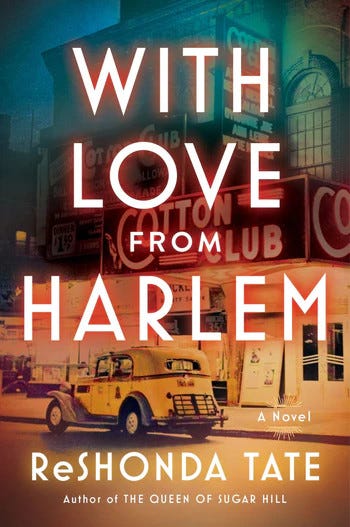
First things first, this book is good. Like dangerously good. I read this book in one sitting after work! I completely lost track of time and found myself overly invested in these people while they stressed me out with their piss poor choices.
I also love the fact that Harlem feels alive in this book. It’s not just as a setting, but as a presence. It’s the place where everything happened and everyone wanted to be.
I think that’s what pulled me in first.
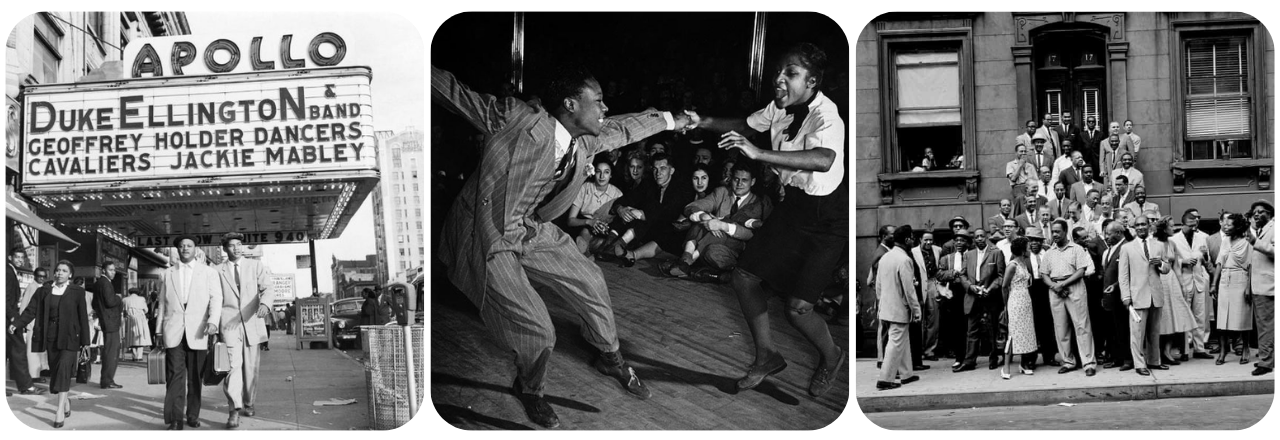
this book takes you through history broadly, too.
I’m not sure if I’ve ever expressly stated this before, but I love historical fiction. It satisfies the want to read for escape and learning at the same time. I especially love a book that makes me pause while reading to google in real time. Trust and believe I was Googling like no one’s business. How come no one ever told be Quincy Jones was a messy ass hoe?
I mean, we knew he was a hoe, but a messy one with loose lips is actually crazy. Allegedly, of course.
I was impressed with how seamlessly this book honored a timeline in the story that mirrored a larger timeline in the backdrop.
This probably doesn’t make any sense…let me put it this way:
There’s a specific scene where Hazel Scott goes to look for Billie Holiday at the hotel. While in the lobby, there’s an altercation between a Black woman and a police officer. A Black soldier home from WW2 stepped in to de-escalate the situation. We learn that this young man loses his life at the hands of the police officer and riots follow this incident. Against the backdrop of this scene, we learn that, at this time, riots and civil unrest are breaking out across the country like Detroit and LA.
Now, this scene is based off a real event. On August 1, 1943, a solider tried to deescalate a situation in which a white officer was attempting to arrest a Black woman in the lobby of the Braddock hotel. This lead to a physical altercation which resulted in the officer firing his weapon at the soldier. The solider was hit in the shoulder, but suffered no fatal wounds.
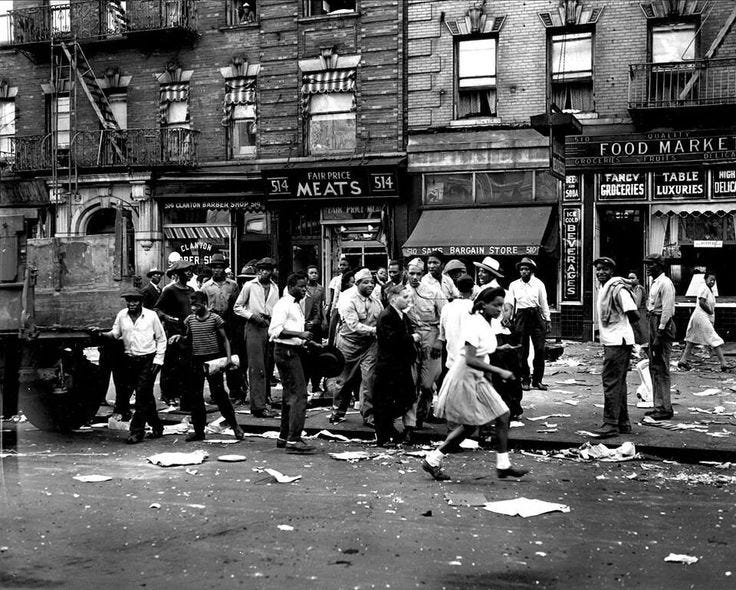
What I find most fascinating is the fact that, in the book, we hear the shot go off and we assume this young man loses his life. In reality, that was an inaccurate detail that spread like wildfire and caused unrest — rightfully so. Allowing the rumor to ring true, and have readers experience that uncertainty that doesn’t quite feel uncertain because we know what the outcome of police encounters are, for the sake of the story, helps to further contextualize the unrest throughout the country at this time as well as emphasize the point that people truly believed this soldier was fatally wounded.
You see why I love this genre? Send me down a rabbit hole and learn me something!
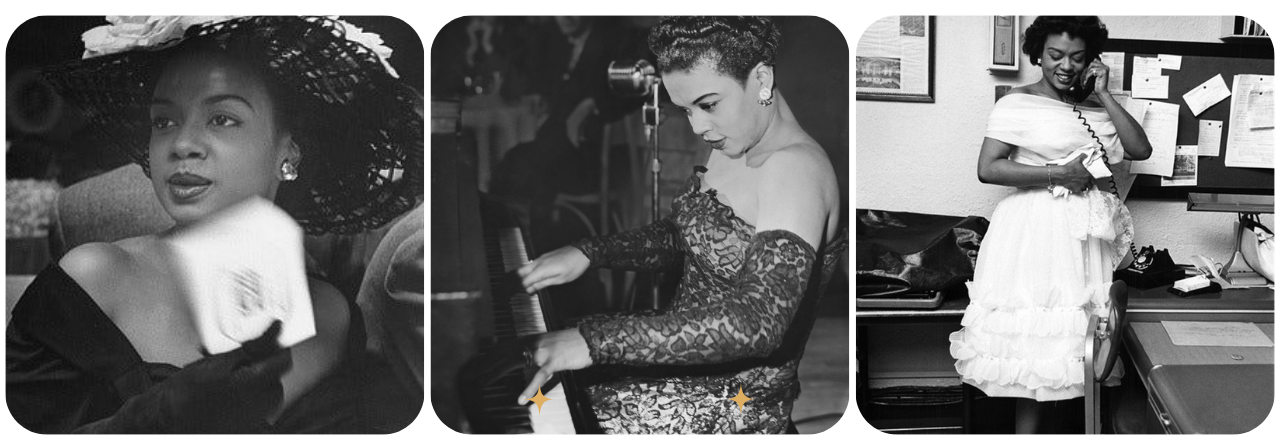
Hazel, baby.
I need us to talk about Hazel.
I fully enjoyed getting to learn more about Hazel Scott. I only vaguely remembered her as a musician during the Harlem Renaissance, but getting a chance to fictionally dive into who she was and her accolades was wonderful.
She was such a strong woman and bold too. I can’t imagine turning down opportunities that were hard to come by to stand behind your morals. She was quite literally making an impact on racial injustices, yet we barely hear about her as a civil rights activist. I have a sneaking suspicion that that’s thanks to her connection to her ain’t shit husband Adam Clayton Powell Jr.
What’s funny is I have always only heard two kinds of things about ACPII - he’s a God send and the best thing since sliced bread, or he’s a womanizer. And boy did we get into that lore with this book. Between reading way to much about that man, the sacrifices she made, and what she dealt with when it came to him, it made me want to jump through the pages and shake her so bad.
Because what absolutely took me OUT is how much she was expected to give up in order to love this man.
Her time. Her identity. Shit, even her sense of self, at times.
And the wildest part? It didn’t feel exaggerated. It felt familiar.
Like a quiet echo of all the ways women—specifically Black women—are taught that love sometimes looks like endurance.
“well if he’s not beating you…”
If you read this book, tell me at what point did Hazel’s sacrifices stop feeling romantic to you?
eff that man
Let me be very clear:
Adam Clayton Powell Jr. is charismatic. Brilliant. Ambitious. Did so much for our people.
But also???
He’s a fucking menace.
Because the way he moves through this story taking, expecting, orbiting Hazel’s devotion without fully pouring back into her had me pausing the book like: “oh so we’re doing THIS?”
And what’s frustrating is that the writing is so good, you almost forget how much good he did outside of his personal love life. Regardless, he still ain’t shit and I don’t think he was capable of loving Hazel properly. She always going to have to shrink to fit into his world even though he knew damn well who she was when he met her.
Uggggh that man irked me so bad.
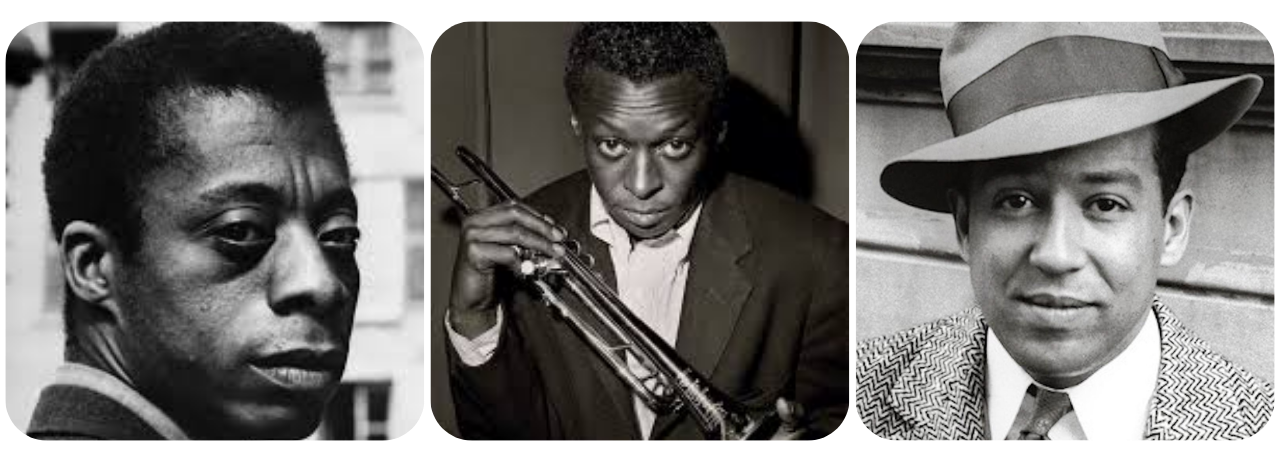
casual sprinkles of Black excellence
One of my favorite things about this book was the way it casually weaves in figures from the Harlem Renaissance. It’s not like the name drop of that obnoxious person like oh I know so and so. In fact, there’s not even any exposition surrounding these people.
Just: “You’re in the room with greatness. Act accordingly.”
It made Harlem feel interconnected. Alive. Like everybody knew everybody and brilliance was just in the air.
Much like today, if I go to Harlem, I can almost guarantee I’m going to be rubbing elbows with the who’s who of this or that industry so it was a fun reading experience to see how much today’s Harlem still has in common with her former version.
the real conflict
As much as this book was a rich dive into Hazel and the Harlem Renaissance, I felt like this book is really asking us what happens when love requires too much of you? What are we willing to sacrifice to be chosen? Who benefits from that sacrifice? And what does it look like to choose yourself after you’ve forgotten how?
We read (many pages) about a relationship that didn’t accept compromise or growth. Instead, we read about erosion.
We watched Hazel navigate the line between devotion and disappearance and that was honestly the emotional core of the story for me.
So needless to say, when Hazel found her way back to herself I exhaled. It may not be the ending that I wanted, and I still think she could have fictionalized that man out of the story, but this ending still felt earned.
I’m glad I read it.
Even if I am still holding a personal grudge against a man from history.
Yes|No|Maybe: YES!
Beautifully written. Hard to put down. Emotionally exhausting in the best way.
If Hazel was your friend are you supporting her relationship, or are you pulling her aside for a let’s bffr conversation?
If you made it this far, tell me: why tf did that man name his kids like that?